
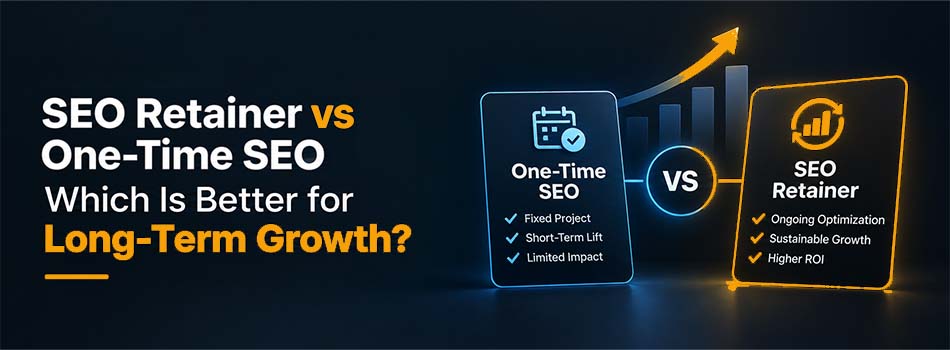
SEO Retainer vs One Time SEO: Which Is Better for Long Term Growth?
Ask any business owner who has hired an SEO agency before, and you'll probably hear one of two stories. The first: "We paid every month for a year and never really knew what they were doing." The second: "We paid for a big SEO project, rankings went up, and six months later everything slipped back."
Both stories are common, and both usually come from the same mistake: buying the wrong type of SEO services for the situation.
A monthly retainer and a one time project are built for different jobs. Neither is automatically better. This guide explains what each one really covers, when each makes sense, and how to tell whether you're getting value from whichever you choose.
What One Time SEO Actually Includes
One time SEO is a fixed project with a clear start and finish. You pay for a defined piece of work, it gets delivered, and the engagement ends.
Typical one time projects include:
-
A full SEO audit, covering technical health, content, links and competitors, with a prioritised list of fixes.
-
Technical cleanup, such as fixing crawl errors, broken redirects, duplicate content, slow pages and mobile issues.
-
On page optimisation of your key pages, including titles, headings, content structure and internal links.
-
Website migration support, making sure a redesign or platform change doesn't wipe out existing rankings.
-
Launch SEO for a new website, so it's built correctly from day one.
The value of a one time project is focus. It fixes specific problems properly, and you walk away with a stronger foundation.
What an SEO Retainer Actually Includes
An SEO retainer is an ongoing monthly arrangement. Instead of a single project, the agency works on your site continuously, building on what came before.
A good retainer usually covers:
-
Content creation and updates, including new service pages, guides and refreshes of pages that are losing ground.
-
Link building and digital PR, earning mentions and links from credible websites month after month.
-
Technical monitoring, catching new problems before they hurt rankings, especially after site updates.
-
Competitor tracking, so you know when a rival starts gaining on your key searches.
-
Response to algorithm updates, adjusting the strategy when Google changes how it ranks pages.
-
AI search visibility, tracking and improving how your brand appears in AI Overviews and tools like ChatGPT.
-
Monthly reporting, tied to enquiries and revenue, not just rankings.
The value of a retainer is momentum. SEO results compound over time, and a retainer keeps that compounding going.
Why Rankings Don't Stay Put
This is the part that catches people out. Many businesses assume that once a website is "optimised," it stays optimised. It doesn't, for four reasons.
Competitors keep working. If you stop, and the business ranking just below you doesn't, they'll eventually overtake you. SEO is relative. You're not being judged against a fixed standard but against whoever else wants the same searches.
Google keeps changing. Google makes thousands of changes to its search systems every year, including several major updates. What ranked well last year may not rank well this year.
Content ages. Prices change, statistics go out of date, and newer, better articles get published. A page that was the best answer two years ago might now look stale next to newer competition.
Websites break. Every time your team adds pages, installs a plugin or changes the design, there's a chance something goes wrong for SEO. Without monitoring, these problems can go unnoticed for months.
That's why one time SEO projects often produce a lift that fades. The work wasn't wrong. It just wasn't followed up.
When One Time SEO Makes Sense
A one time project is often the smarter choice in these situations:
You're launching or rebuilding a website. Getting the structure, technical setup and redirects right at launch is a defined job, and it matters enormously.
You have a specific technical problem. A sudden traffic drop, indexing issues or a messy migration needs focused expert attention, not a year long contract.
You have an in house team that can execute. If your team can write content and build links but needs expert direction, an audit with a clear roadmap may be all you need from outside.
You're in a small, low competition market. A local business in a smaller town with few online competitors may do well with a strong initial setup and occasional check ins.
You want to test an agency before committing. A paid audit is a good way to see how an SEO agency thinks and works before signing anything longer.
When a Retainer Makes Sense
A retainer usually delivers better value when:
Your market is competitive. If several businesses are fighting for the same searches, standing still means falling behind.
Organic search is a major source of leads or sales. If SEO drives a meaningful share of your revenue, it deserves continuous attention, just like sales or paid advertising.
You need ongoing content and links. These are the two biggest drivers of long term rankings, and both take consistent monthly effort.
You're expanding. New services, new locations or new countries all need new pages, new keywords and new authority.
You don't have in house SEO expertise. Without someone internally watching rankings, technical health and competitors, problems tend to build up quietly.
Side by Side Comparison
|
Factor |
One Time SEO |
SEO Retainer |
|
Best for |
Fixing, launching, migrating |
Growing and defending rankings |
|
Cost structure |
Single project fee |
Monthly fee |
|
Duration |
Weeks to a few months |
Ongoing, usually reviewed quarterly |
|
Content creation |
Limited or none |
Regular and planned |
|
Link building |
Rarely included |
Core part of the work |
|
Response to algorithm updates |
Not covered after delivery |
Built in |
|
Competitor monitoring |
Snapshot at time of audit |
Continuous |
|
Long term results |
Strong start, can fade |
Compounding over time |
|
Internal effort needed |
High, if you implement the roadmap yourself |
Lower, since the agency executes |
The Middle Ground Many Businesses Miss
The choice isn't always one or the other. Some of the most effective setups we see combine both.
Project first, then retainer. Start with a focused project to fix technical issues and optimise core pages. Once the foundation is solid, move to a smaller retainer for content, links and monitoring. This avoids paying monthly fees while basic problems remain unfixed.
Audit plus quarterly reviews. If your internal team handles day to day SEO, a detailed audit followed by quarterly expert reviews keeps them on track without the cost of a full retainer.
Retainer for growth, projects for spikes. A steady monthly retainer covers the ongoing work, with separate projects for bigger one off needs such as a redesign or a new country launch.
The right mix depends on how much your team can handle internally and how competitive your market is.
How SEO Pricing Models Work
You'll typically come across four models when speaking to SEO agencies.
Project pricing is a fixed fee for a defined scope, such as an audit or a migration. It's predictable and easy to budget for.
Monthly retainers are a fixed monthly fee for an agreed scope of ongoing work. The best retainers spell out exactly what's delivered each month.
Hourly consulting suits businesses that mainly need expert advice and have their own team to carry it out.
Performance based pricing ties fees to rankings or traffic. It sounds attractive, but be careful. It can encourage an agency to chase easy keywords that look good in a report but bring in little business.
Whichever model you choose, what matters most is clarity. You should always know what you're paying for and how success will be measured.
Warning Signs on Both Sides
Watch out for retainers where:
-
The monthly report looks almost identical every month.
-
Deliverables are described vaguely, such as "ongoing optimisation," with no specifics.
-
Rankings are reported, but enquiries and revenue are never mentioned.
-
You're locked into a long contract with no review points.
Watch out for one time projects where:
-
The agency promises rankings will be "permanent."
-
You receive a long audit document but no clear priorities or guidance on implementation.
-
Nobody explains what happens after the project ends.
In both cases, a good SEO agency should be able to explain in plain language what they'll do, why it matters and how you'll know it's working.
Questions to Ask Any SEO Agency
Before signing either type of agreement, ask:
-
What exactly will be delivered, and when?
-
Who will be working on my account?
-
How will you measure success, and will that include leads and revenue?
-
What happens if results don't improve after a few months?
-
Will I own all the content, accounts and data?
-
For a project: what should we do after you finish?
-
For a retainer: how often will we review the plan together?
The answers will tell you a lot about whether the agency is focused on your growth or simply on keeping the contract.
Frequently Asked Questions
Is an SEO retainer worth the money?
For competitive markets and businesses that rely on organic search for leads, usually yes. A retainer keeps content, links and technical health moving forward, which is what drives long term growth. For small, low competition markets, a one time project with occasional reviews may be enough.
Can one time SEO give permanent results?
No SEO result is permanent. A one time project can create a strong, lasting foundation, but rankings will gradually slip as competitors improve, Google updates its systems and content ages. Some ongoing effort, whether internal or external, is needed to hold and grow your position.
How long should an SEO retainer last?
Most businesses should plan for at least six to twelve months, since meaningful SEO results typically take three to six months to appear. After that, reviewing the scope every quarter keeps the retainer focused on what's actually working.
What should monthly SEO services include?
Good monthly SEO services usually include content creation or updates, link building, technical monitoring, competitor tracking and clear reporting tied to enquiries and revenue. Increasingly, they also include tracking how your brand appears in AI search tools.
Should I start with an SEO audit before a retainer?
Often, yes. An audit identifies the biggest problems and opportunities first, so any ongoing work is focused on what will make the most difference. Many agencies include an audit in the first month of a retainer.
The Bottom Line
One time SEO fixes things. A retainer grows things. If your website has specific problems or you're launching something new, a focused project is often the right starting point. If organic search is a real part of how you win customers, and your competitors are working to take those customers from you, ongoing SEO is what keeps you ahead.
For many businesses, the smartest path is both: fix the foundation first, then keep building on it.
If you're not sure which option fits your business, speak to the SEO agency team at Connective9. We'll review your website, your market and your goals, then recommend the approach that makes sense, whether that's a one time project, a retainer or a mix of the two.

